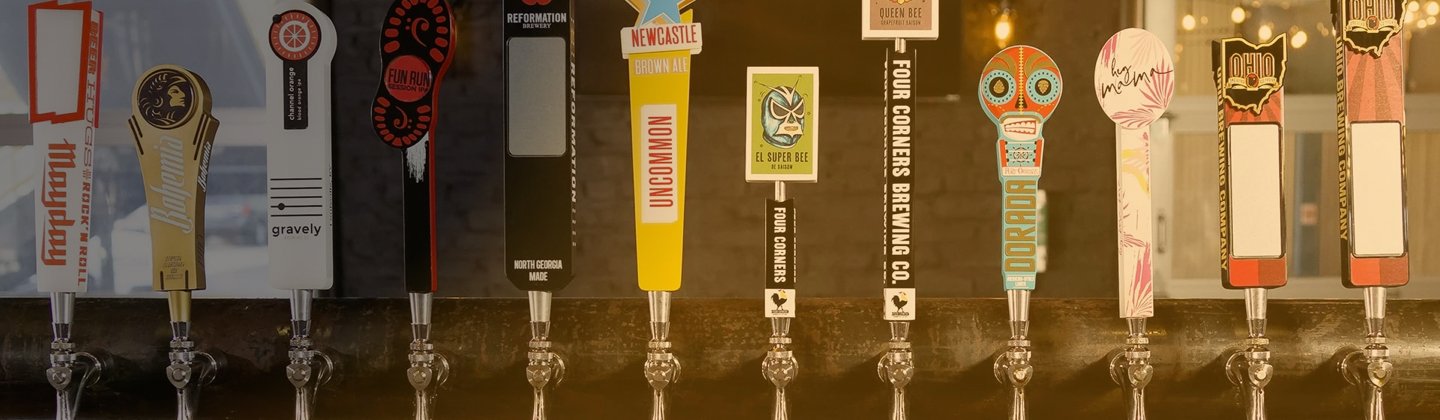
The tap handle is the last ad a drinker sees before ordering. Here is what it does for a brewery, what it costs to build, and how to order one without wasting a run.
Keg wine pours fresher and wastes less than bottles. Here is how the system works, what to ask a distributor, and why the tap handle matters as much as it does for beer.
A roaster's guide to custom labels: which material survives a damp bag, how to size the label to the package, what has to be printed on it, and when to move from label to printed can.
Digital screens do not sell beer at a bar. Tap handles, tin tackers, LED signs, and case stackers do. Here is what each one is for and how breweries get them made.
A taproom does not need 15 glass shapes. It needs the right three, sized to the pour, branded to match the tap wall. Here is the list and the reasoning.
Logo glassware is the cheapest piece of a bar's brand the customer holds in their hand. Here is when it pays, how it is printed, and how to match it to the tap wall.
Distributors supply most tap handles for free, so when should a bar pay for its own? House beers, rotating taps, cocktails on tap, and the taproom that wants to look like one brand.
A whiskey label has to pass the TTB, survive the bar well, and sell from six feet away. Here is the required information, the right material, and eight design rules that hold up.